01 · The basic physics
What happens when the coil passes over metal?
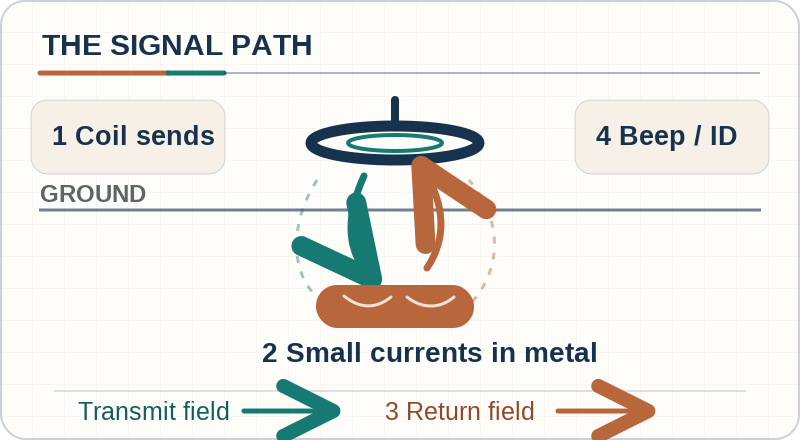
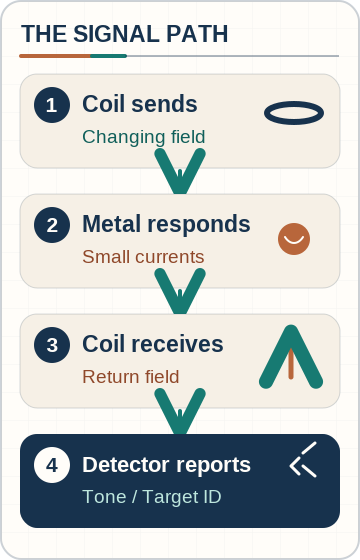
Inside the search coil, an electrical signal creates a changing magnetic field. A nearby metal object conducts small loops of current, called eddy currents. These make a second, much weaker field. The detector reads the difference and alerts you.
Many VLF coils have transmit and receive windings. Other designs use the coil differently, so the exact circuit depends on the machine. The useful field lesson is simpler: the detector reacts to a response, not a picture of what is underground.
Target size, shape, metal mix, and angle change that response. Even a strong tone cannot prove that the object is a coin. The explanation follows Minelab's published basic operation note.
02 · Read the clue
What can a beep or Target ID tell you?
A tone says the detector noticed a change. A Target ID number estimates the response on your machine's own scale. Discrimination can quiet certain responses, such as some iron. Neither feature can identify an object with certainty.
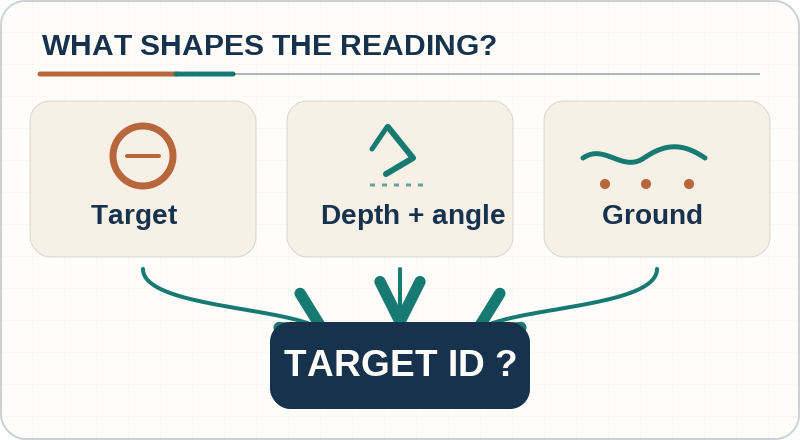
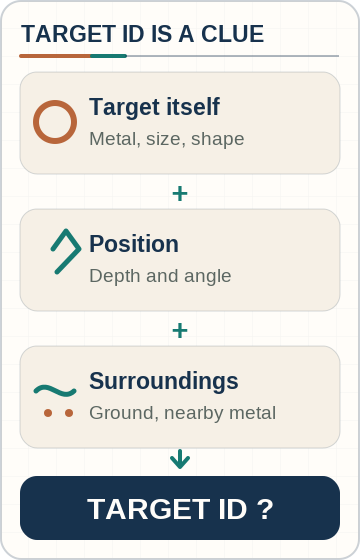
For depth expectations, see what changes metal detector depth. Conductivity is only part of the story. Size, shape, angle, nearby trash, and the ground also affect the signal. Sweep the target from another direction and listen for a repeatable center. The first-hunt signal lesson turns that check into a field routine.
03 · The ground also answers
Why can soil or wet salt sand make the detector noisy?
The coil hears more than buried targets. Iron-rich soil can create a magnetic background response. Wet salt sand is conductive and can make a detector react as you sweep. Ground balance and a suitable search mode help the detector reduce that background, but the right controls differ by model.
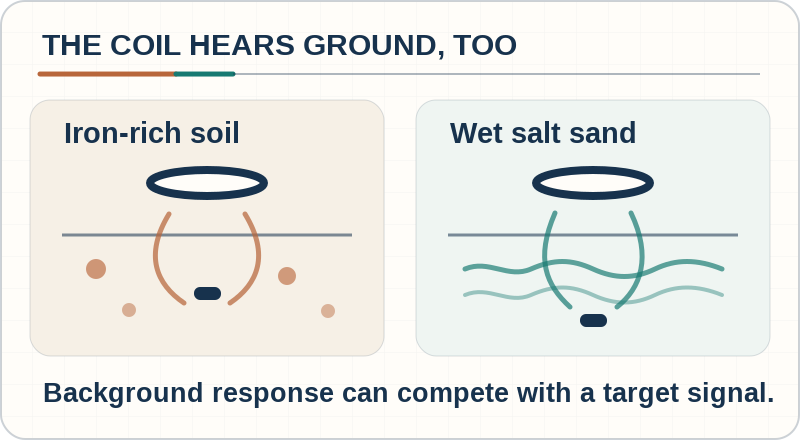
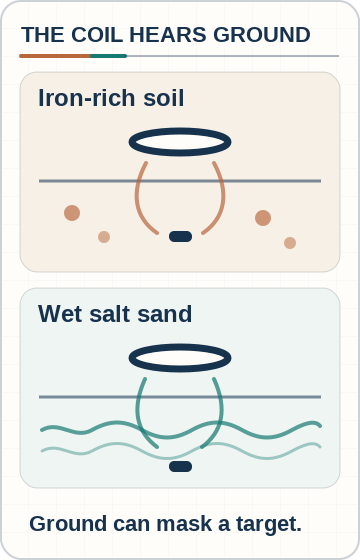
Start with the mode named in your manual, then change one setting at a time. For a beach, use our wet salt-sand setup guide. Minelab's EQUINOX 700 manual shows one model-specific example of reducing salt response; its settings should not be copied blindly to another detector.
04 · Two ways to listen
How do VLF and pulse induction differ?
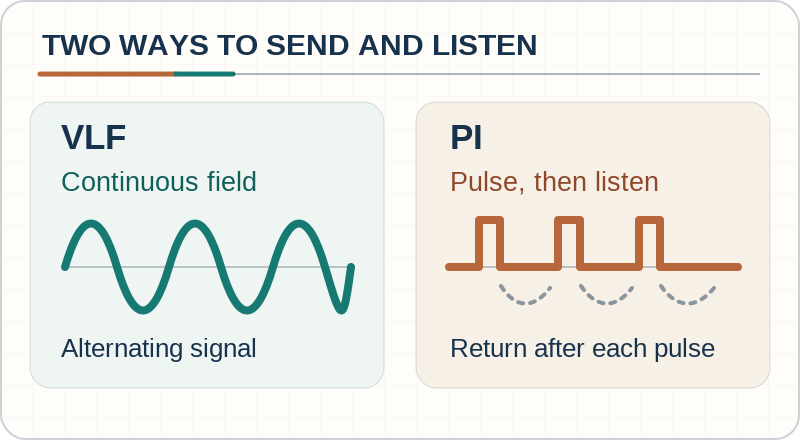
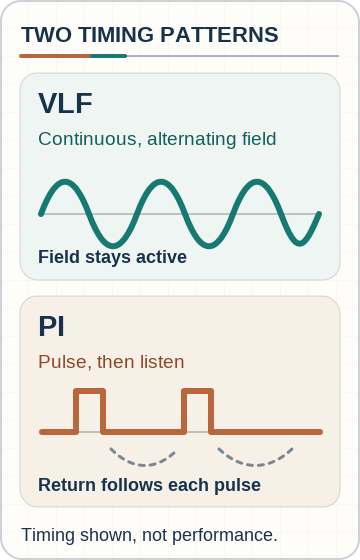
A very low frequency (VLF) detector sends a repeating field and measures the target response while it runs. A pulse-induction (PI) detector sends short pulses and listens after each pulse. Both use a metal target's return signal; the timing and signal processing differ.
Swipe sideways to read the full comparison.
| Method | Signal pattern | Useful question |
|---|---|---|
| VLF | Repeating field and return measurement | How much target information do I want from tones and ID? |
| Pulse induction | Short transmit pulse, then a listening period | Will difficult mineralized ground affect my normal setup? |
Technology alone does not decide the best detector. Ground, target size, coil, controls, and your budget all matter. Our gold-detector comparison shows why a VLF or PI choice can change in highly mineralized ground.
05 · Make it useful
Try one simple signal check before your first hunt.
Put a coin and a pull tab on a clean, nonmetal surface. In your detector's basic mode, pass the coil over each one at the same height. Listen first, then look at the Target ID. Turn each object and repeat. You can hear why the tone and number are clues instead of guarantees.
Practice where you have permission and follow the exact manual for your machine. For the full legal-ground and recovery sequence, open the first-hunt guide. If you are still choosing a machine, compare the beginner detector options by the ground you will actually hunt.